Posts Tagged: James Lovelock
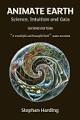
Gaia Story – 6 – Origin Story for Life
What is Gaia theory’s relevance to us as the rest of the century unfolds? You might think it’s the contribution it makes to future climate models, enabling us to predict what will happen if we keep on pumping huge amounts
Gaia Story – 6 – Origin Story for Life
What is Gaia theory’s relevance to us as the rest of the century unfolds? You might think it’s the contribution it makes to future climate models, enabling us to predict what will happen if we keep on pumping huge amounts
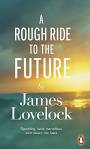
Gaia Story – 5 – A Rough Ride
If we fast forward to the first decade of the 21st Century. we find Lovelock still writing books about Gaia, but their tone is much darker. The Revenge of Gaia (2006) is followed by The Vanishing Face of Gaia: A
Gaia Story – 5 – A Rough Ride
If we fast forward to the first decade of the 21st Century. we find Lovelock still writing books about Gaia, but their tone is much darker. The Revenge of Gaia (2006) is followed by The Vanishing Face of Gaia: A

Gaia Story – 4 – The Theory Named
Lovelock was fond of going on walks with the novelist William Golding, who lived in the same village. On one of these perambulations he shared his hypothesis with his friend, who, after mulling it over, “suggested that anything alive deserves
Gaia Story – 4 – The Theory Named
Lovelock was fond of going on walks with the novelist William Golding, who lived in the same village. On one of these perambulations he shared his hypothesis with his friend, who, after mulling it over, “suggested that anything alive deserves
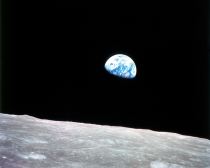
The Gaia Story – 1 – Intro
Bioregionalism is a way of seeing ourselves as part of a complex ecosystem which – over time – we, as humans, have both modified and adapted to. This constant too-and-fro continues to form our human “culture”. Gaia can be seen
The Gaia Story – 1 – Intro
Bioregionalism is a way of seeing ourselves as part of a complex ecosystem which – over time – we, as humans, have both modified and adapted to. This constant too-and-fro continues to form our human “culture”. Gaia can be seen
 bioregioning